
Last updated October 16, 2026
 Wrought iron
 Wood & steel frame
 Farm & ranch
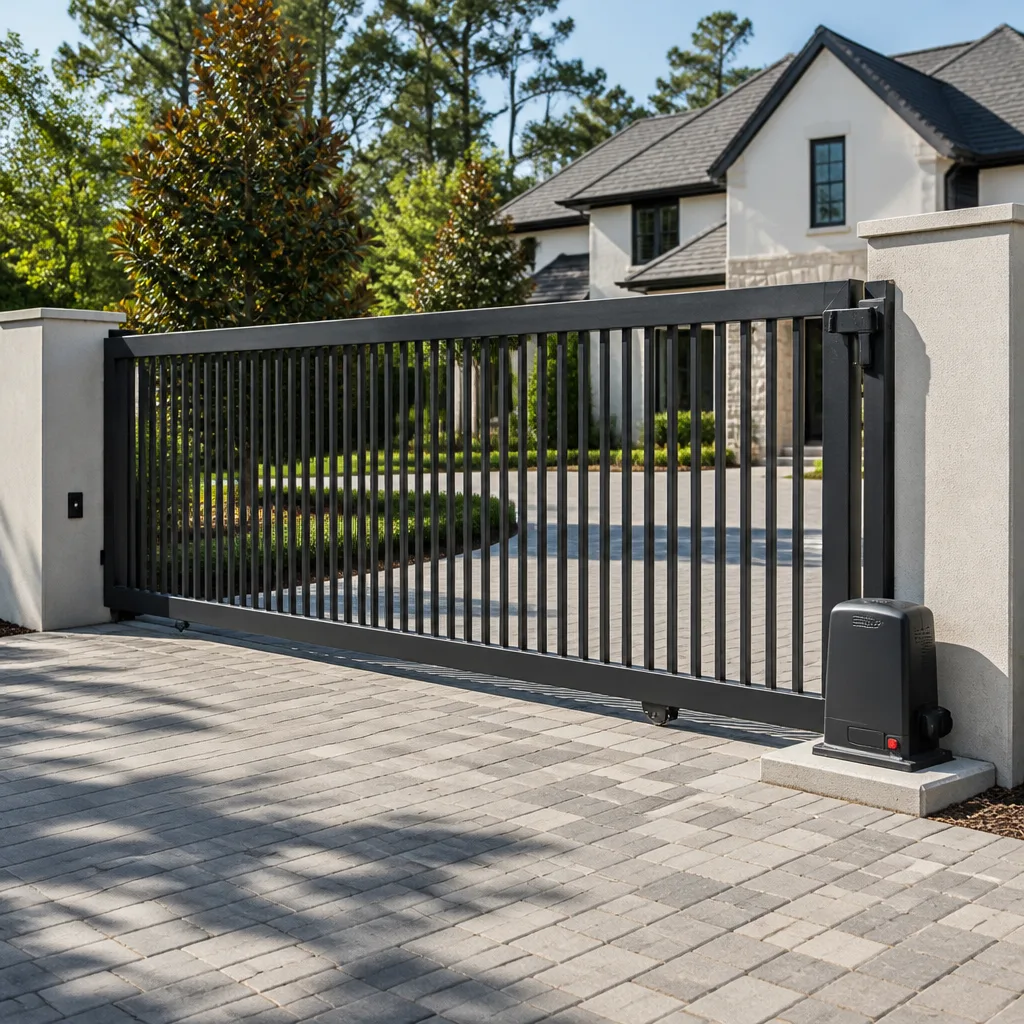 Sliding driveway gates
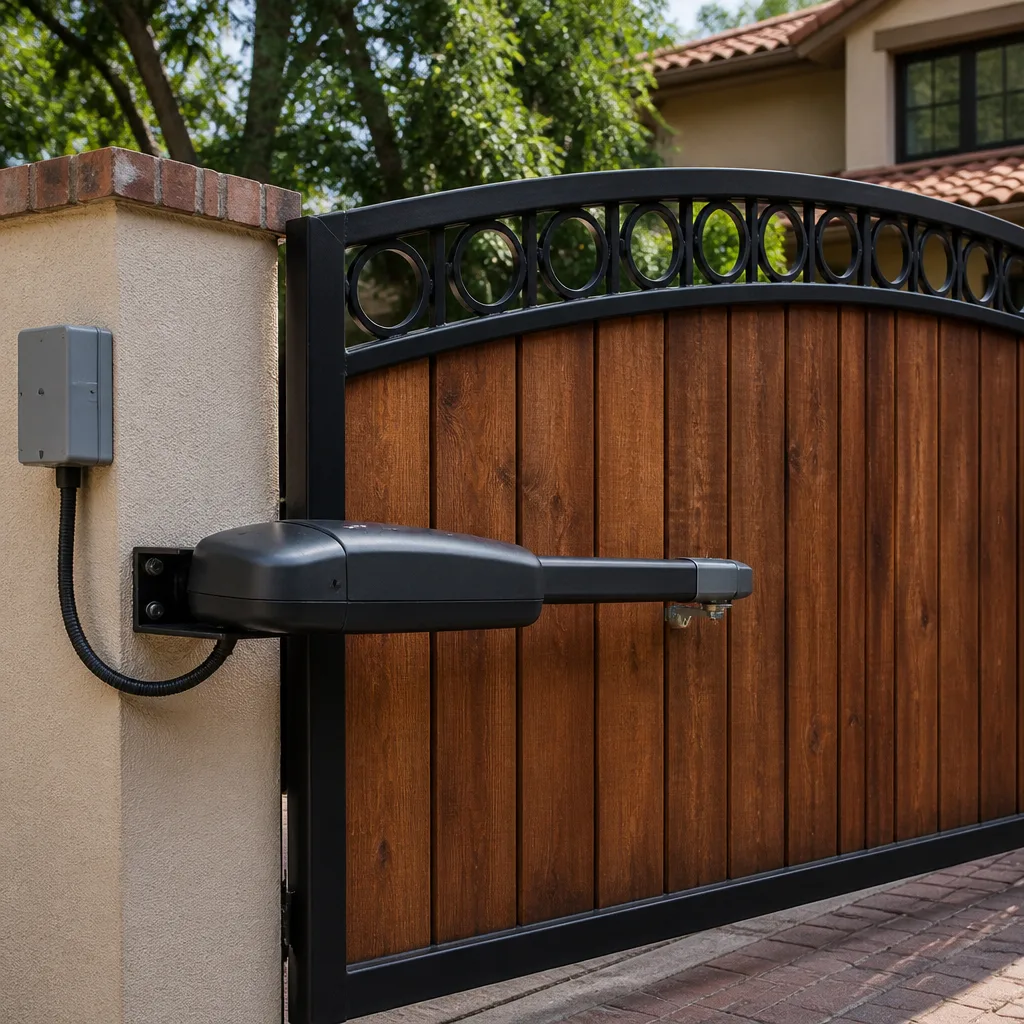 LiftMaster operators
Free on-site gate assessment - hinges, posts, and your LiftMaster or Nice gate operator checked before anything is quoted
The assessment is free and the quote is the invoice.
Get your free estimateDIY vs Professional Gate Repair: The Torrance Homeowner’s Decision Guide
An automated gate is a 300-to-800-pound moving machine governed by UL 325 safety standards. That’s not a marketing line – it’s the legal and physical reality that determines which repairs you can do yourself and which ones you shouldn’t touch. This guide draws that line task by task, using the specific conditions Torrance homeowners face: coastal salt air on the west side, clay-heavy soil that shifts with seasonal moisture in neighborhoods like Southwood and Seaside Ranchos, and the constant friction of gates that cycle dozens of times daily on busy streets like Anza Avenue and Crenshaw Boulevard. You’ll learn which repairs are genuinely DIY-appropriate, which ones void warranties, which ones create liability exposure under California law, and what each category actually costs.
Styles & brands we work with
Quick Answer
DIY gate repair in Torrance is appropriate for about 20% of common issues – hinge lubrication, track cleaning, sensor alignment, minor fastener tightening, and battery replacement on compatible operator models. Everything involving entrapment-zone sensors, motor programming, high-tension springs, welded frame cracks, or electrical supply work carries safety risk, warranty consequences, and legal liability that outweigh any short-term savings. For those repairs, our Gate Repair services provide licensed professionals with UL 325 compliance knowledge - the only legally defensible choice.
Table of Contents
- UL 325 and Why It Decides the DIY Question for You
- Six Gate Repairs a Torrance Homeowner Can Safely Do
- Which Repairs Void Your Gate Warranty – and How to Check Before You Touch Anything
- California Liability: What ‘Attractive Nuisance’ Means for a Self-Repaired Gate
- DIY vs Professional Cost Comparison: Where You Save and Where You Don’t
- The Only Three Tools You Actually Need for Legitimate Gate Maintenance
- Common Mistakes to Avoid
- When to Call a Professional
- Frequently Asked Questions
- The Bottom Line
UL 325 and Why It Decides the DIY Question for You
UL 325 is the national safety standard for automated gate systems. It governs how gates detect obstructions, how entrapment sensors must be positioned, how force limits are calibrated, and what happens when someone or something is in the gate’s path. Every gate installed in Torrance after 2001 is required to comply with it. When a homeowner opens an operator housing and starts adjusting limit switches or force dials without knowing the standard’s requirements for that specific model, the gate may still open and close perfectly – right up until it closes on a child, a dog, or a delivery driver. At that point, the homeowner is not just repairing a gate. They’re answering questions about why a UL 325-compliant system was modified by someone who wasn’t qualified to verify compliance.
Here’s what UL 325 requires that most DIY guides never mention:
- Two independent entrapment protection methods – typically a pair of photo eyes plus an audible alarm or a reversing edge. You can verify these exist. You should not attempt to rewire or bypass them.
- Force limitation settings calibrated so the gate reverses on contact with a solid object. This requires a force gauge on most models made after 2016.
- Specific clearance distances between the gate and fixed objects like posts, walls, and curbs to prevent crushing points.
- Warning signage placed on both sides of the gate, visible from a specified distance.
In our experience inspecting Torrance gates, the most common UL 325 violation we find is a bypassed photo eye – usually because the original sensor failed, and someone (often a previous owner or a well-meaning handyman) jumped the wires to keep the gate running. The gate works. The safety system doesn’t. That’s the exact scenario where DIY “success” creates real liability.
Six Gate Repairs a Torrance Homeowner Can Safely Do
Not every gate problem requires a service truck. These six tasks are genuinely DIY-appropriate for a homeowner with basic tools and a willingness to read the operator manual. None of them involve live electrical work, high-tension springs, or entrapment-zone calibration.
- Chain and track lubrication. Slide gates in Torrance accumulate dust and airborne salt that turns chain lubricant into grinding paste within a season. Cleaning the chain with a dry rag and applying a lightweight chain lubricant every 3-4 months extends the life of the drive system on models from Linear, LiftMaster, and BFT. This is a 20-minute job with zero safety exposure.
- Photo eye cleaning and alignment adjustment. If your gate reverses for no reason, check the photo eyes. Dust, spider webs, or a shifted bracket are the usual culprits. Clean the lenses with a soft cloth, tighten the mounting screws, and verify the indicator light (usually green or red depending on the brand) comes on solid when the eyes are aligned.
- Battery replacement on compatible operators. Some LiftMaster and FAAC swing operators run on a 12V battery that’s accessible behind a cover panel. Replacing a dead battery with the manufacturer-specified replacement is straightforward. But – and this matters – on models where the battery is integrated into the control board harness, leave it to a technician. Unplugging the wrong connector can wipe the operator’s programming.
- Fastener tightening and visual inspection. Torrance’s soil shifts with seasonal irrigation and winter rains. Gate posts can drift slightly, loosening hinge bolts, rack mounts, and wheel carriage fasteners over time. A monthly walk-around with a wrench is good practice. Tighten what’s loose, note what’s cracked, and replace any fastener showing rust.
- Guide wheel and track debris clearing. Leaves, palm fronds, and construction debris collect in the track channel on many Torrance slide gates. Clear the track, inspect the guide wheels for wear, and vacuum out the operator housing vents. This prevents the gate from dragging and overloading the motor.
- Manual release verification. Every automated gate should have a manual release that lets you open it by hand in a power outage. Test it monthly. If it’s stiff, lubricate the release mechanism. If it doesn’t work at all, that’s a flag for professional attention – not a lever to force.
These six tasks cover the bulk of routine upkeep. They’ll keep your gate repair in Torrance needs to a minimum. What they won’t do is fix a gate that’s already binding, dragging, or throwing error codes – those are symptoms of deeper mechanical or electrical problems.
Which Repairs Void Your Gate Warranty – and How to Check Before You Touch Anything
Every gate operator manufacturer writes its own warranty terms, and those terms are not all the same. What’s true for a LiftMaster won’t necessarily hold for a FAAC or a BFT. Before you open any operator housing, pull your warranty document and read the exclusions section. Here’s the pattern we see across the brands we service:
- LiftMaster warranties typically exclude damage from “unauthorized modification or repair.” That language is deliberately broad. If a homeowner repairs a LiftMaster operator themselves and the operator fails later, the manufacturer can – and does – deny the claim.
- FAAC operators are widely used on commercial and high-end residential gates. Their warranty terms generally require service by “qualified personnel” for any internal component replacement. The definition of “qualified” is intentionally vague, but it does not include the homeowner who watched three YouTube videos.
- BFT and Linear have similar language in their residential lines: opening the housing and replacing internal parts without factory authorization can void coverage on the entire board assembly, not just the part that was touched.
The practical test is simple: if a repair requires replacing a component inside the operator housing – a limit switch, a capacitor, a control board, a transformer – the warranty risk is real. If a repair is external – chain lubrication, track cleaning, fastener tightening – warranty isn’t in play.
One more point worth your attention: some gate installers register the system’s warranty with the manufacturer under their own name. If you didn’t receive a warranty registration confirmation when the gate was installed, the warranty may not be active at all. A gate motor repair in Torrance done by a trained technician usually includes warranty reinstatement or at least verification that the system is registered. A DIY repair never does that.
California Liability: What ‘Attractive Nuisance’ Means for a Self-Repaired Gate
California property law includes a doctrine called “attractive nuisance,” which holds property owners liable for injuries to children caused by dangerous conditions on their property that a reasonable person should have anticipated. A motorized gate – especially a heavy iron gate with gaps that invite climbing – falls squarely under this doctrine when it isn’t maintained to the safety standards that govern it.
If a self-repaired gate fails to reverse on contact with a child and the child is injured, the owner’s legal exposure is not limited to the cost of medical care. In California, it can include damages for pain and suffering, permanent impairment, and in the worst cases, wrongful death. A plaintiff’s attorney only needs to establish that the owner knew or should have known the gate posed a hazard. A homeowner who adjusted the operator’s force settings themselves has just handed the attorney the key evidence: the person who modified the safety system was not qualified to verify it.
Here’s what that liability looks like in practical terms for a Torrance homeowner:
- Delivery drivers. Torrance streets see constant package and food delivery traffic. If a gate closes on a driver while they’re walking back to their vehicle, and the entrapment sensors were bypassed or the force settings were incorrectly calibrated, the owner’s homeowners insurance may be on the hook for a claim that could have been prevented entirely.
- Neighborhood children. Gates with horizontal rails are climbable. Torrance’s dense residential blocks mean kids are everywhere – walking to school, riding bikes, chasing balls into yards. A gate that fails to reverse on contact is an injury waiting to happen.
- Guests and service workers. Anyone you invite onto your property – a friend, a landscaper, a pool service tech – is owed a property in reasonably safe condition. That includes the gate they pass through.
We’re not lawyers, and this isn’t legal advice. But after 17 years in this business, the pattern is clear: homeowners who understand this risk don’t touch entrapment-zone components. They leave them to technicians whose work is documented and compliant with UL 325.
DIY vs Professional Cost Comparison: Where You Save and Where You Don’t
The honest answer to “should I do it myself to save money?” is: sometimes, and only on the cheapest repairs (see our Gate Repair Cost Breakdown: The Torrance Homeowner’s Reference for 2026). Here’s a line-by-line comparison for common gate issues in the Torrance market, using price ranges we see in the field every week.
| Repair Task | Typical DIY Cost | Typical Professional Cost in Torrance | Verdict |
|---|---|---|---|
| Chain lubrication | $8 – $15 (lubricant) | $45 – $80 as part of a tune-up | DIY makes sense |
| Photo eye cleaning/alignment | $0 – $5 (cleaning supplies) | $85 – $140 if a technician is called for diagnosis | DIY first, call if the problem persists |
| Fastener tightening | $0 (existing tools) | $60 – $100 service call | DIY makes sense |
| Battery replacement (external) | $35 – $90 (battery) | $120 – $180 | DIY for external, call for internal |
| Limit switch adjustment | $0 (but high risk of error) | $150 – $250 | Professional – warranty and safety exposure |
| Control board replacement | $180 – $500 (if you can source the right board) | $450 – $950 including programming | Professional – programming and compatibility are the real cost |
| Spring or tension cable replacement (swing gates) | $40 – $120 (parts, high injury risk) | $250 – $450 | Professional – these springs hold hundreds of pounds of stored energy |
| Gate frame crack repair (welding) | Not realistically DIY | $300 – $700 depending on location and material | Professional – requires welding equipment and skill |
| Full operator replacement | $800 – $2,000 (parts only, no warranty labor) | $1,800 – $4,500 installed, programmed, warrantied | Professional – the gap narrows fast when a DIY install fails |
The pattern is clear: DIY saves money on maintenance tasks, not repairs. The moment a repair involves internal components, programming, safety sensors, or stored-energy parts, the professional quote typically costs less than the DIY attempt once you account for misdiagnosis, wrong parts, and the second visit that would have been included in the original service.
Consider gate installation in Torrance as the extreme case. A homeowner who installs their own operator and gets the wiring wrong, the force settings wrong, or the mounting alignment wrong has spent $2,000 on parts and created a system that has no warranty coverage and may not pass a safety inspection. A professional installation puts the liability and the warranty on the company that did the work. The $1,800-to-$4,500 range looks different when you understand what it buys.
The Only Three Tools You Actually Need for Legitimate Gate Maintenance
The internet sells “gate repair tool kits” with dozens of pieces. Most of them are marketing filler. A homeowner performing the six legitimate DIY tasks from the first section needs exactly three tools, all of which you likely already own:
- A basic socket set with metric sizes (8mm – 19mm). Gate fasteners in the American residential market are almost universally metric. A socket set handles hinge bolts, rack mounts, battery cover fasteners, and photo eye bracket adjustments. If it’s a cheap set, be prepared to replace the 10mm socket – that one disappears first in every garage and every service truck.
- A can of lightweight chain lubricant (not WD-40). WD-40 is a solvent with light lubricating properties. It’s the wrong product for a gate chain. Chain lubricant is designed to cling to the rollers and pins under load. A can lasts a year or more for a single residential gate. You don’t need specialty gate-branded lubricant – a standard motorcycle chain lubricant works fine.
- A digital level or straight edge. Gate alignment problems often start subtly – the gate sags half an inch, the track settles, the guide wheel wears. A level lets you verify that the gate is plumb and that the track is running true before and after tightening. It turns “this looks off” into “this is off by three-eighths of an inch,” which is the difference between informed maintenance and guessing.
Anything else marketed as a “gate repair tool” – seal pullers, hinge spring compressors, gate-specific multimeters – is specialized equipment for jobs that fall in the professional category anyway. If you need a specialty tool to perform a repair, you’re almost certainly performing a repair you shouldn’t be doing yourself.
Common Mistakes to Avoid
- Lubricating the gate track with grease. Thick grease on a slide gate track collects sand, dust, and the fine airborne grit that blows through Torrance on dry days. Within weeks it becomes an abrasive slurry that accelerates wheel and track wear. Use a dry lubricant on tracks or leave them clean and dry.
- Jumping photo eye wires to “fix” a gate that keeps stopping. This bypasses a primary entrapment protection device and converts a nuisance problem into a safety violation and a liability exposure. If the photo eye is causing false stops, replace or realign it – don’t defeat it.
- Adjusting force settings by guessing. Turning the force dial up “a little” until the gate stops reversing is the single most common cause of entrapment injuries in residential settings. Force settings must be calibrated with a gauge, not by feel.
- Replacing a control board without verifying compatibility first. A LiftMaster board from a 2015 model will not always plug into a 2021 housing, even if the connector looks the same. The website listing may say “compatible” and the board will still brick the system if the firmware version doesn’t match. This is an expensive mistake to make twice.
- Welding a cracked gate frame without releasing tension from the springs and operator first. Welding on a gate that’s still under tension can cause the material to shift mid-weld, creating a worse misalignment than the crack you were fixing. This is not a task to attempt with a borrowed flux-core welder in the driveway.
- Ignoring the manual release until the power goes out. If you’ve never tested the manual release on a sunny Tuesday, you’ll be doing it for the first time in the dark during a power outage, 20 minutes before you need to leave for work. Test it monthly and fix it when it sticks.
- Assuming the gate installer registered the warranty. Many operators installed on Torrance homes were never registered with the manufacturer. By the time a component fails and the homeowner calls about warranty coverage, the window has closed. Verify registration at installation or during the first professional service.
When to Call a Professional
Call a professional when the repair involves entrapment-zone components (photo eyes, reversing edges, force calibration), anything inside the operator housing (limit switches, control boards, capacitors, transformers), any spring or cable under tension on a swing gate, any welded frame repair, or any electrical supply wiring to the operator. These are the boundaries a competent homeowner does not cross. Carver Gate Repair Torrance offers free estimates in Torrance – call (424) 757-9824 and you’ll get a written price before any work starts, no moving numbers at the door.
Frequently Asked Questions
You can legally perform external maintenance tasks: lubricating chains, cleaning and aligning photo eye lenses, tightening fasteners, clearing track debris, replacing external batteries, and testing the manual release. Repairs involving electrical connections, entrapment sensors, tensioned components, or welding carry liability and safety obligations under California law and UL 325 that make professional service the responsible choice.
Professional gate repair in Torrance ranges from $85 for a simple sensor diagnosis to $950 for a control board replacement with programming. Most mechanical repairs – hinge replacements, spring replacements, operator adjustments – fall between $150 and $450. Full operator replacement runs $1,800 to $4,500 installed. Call (424) 757-9824 for an exact quote – estimates are free.
It can, and on most major brands it does. LiftMaster, FAAC, BFT, and Linear all include warranty language that excludes coverage for damage caused by unauthorized modification or repair. Any work inside the operator housing is the highest-risk category. Read your warranty document before opening the housing, and if you can’t find it, call the manufacturer with your serial number to verify coverage terms.
UL 325 is the national safety standard that governs automated gates, including entrapment protection, force limits, and clearance requirements. Every automated gate installed in Torrance must comply with it. A repair that alters or bypasses any UL 325-governed component exposes the homeowner to legal liability if the gate injures someone. This is the single most important reason to leave internal repairs to a qualified technician.
Carver Gate Repair Torrance answers calls with a live person 24/7 and dispatches same-day for emergency repairs where a gate is stuck open, stuck closed, or poses a safety risk. For non-emergency mechanical and electrical repairs, we schedule within a realistic window and show up when we say we will. Call (424) 757-9824 to find out what’s available today.
Torrance sits close enough to the Pacific that westerly winds carry salt-laden moisture across the city, accelerating corrosion on untreated steel gates, chain drives, and electrical connections. Gates in west Torrance neighborhoods like Hollywood Riviera and Southwood Shores corrode faster than those in eastern Torrance. Regular cleaning and lubrication of chains, tracks, and exposed fasteners slows this significantly, and we recommend an annual professional inspection - see our Gate Repair Maintenance Checklist for Torrance Homeowners - to catch corrosion at the electrical connections before it causes board failure.
The Bottom Line
The DIY-vs-professional decision on gate repair comes down to three questions: Does the repair involve entrapment-zone components? Does it require opening the operator housing? Does it involve stored energy in springs or cables? If the answer to any of those is yes, the cost of a professional repair is the cheapest way to maintain a safe, warrantied, legally defensible gate system. For external maintenance tasks, a socket set, chain lubricant, and a level handle most of what a homeowner should be doing anyway. The line isn’t about skill – it’s about liability, warranty terms, and safety standards that exist no matter how handy you are. When in doubt, call a professional and get the written price before the work starts. For more guides & resources, visit our blog. If you’re in Torrance and want a straight answer on a gate issue, Carver Gate Repair Torrance is one call away at (424) 757-9824. We’re the gate repair company of the Garrison Partners family, operating to the Garrison Standard since 2008 – and every repair carries a written guarantee, good for a full year, with a free second visit if it fails inside that window.
Written by Lonnie Burke, Owner at Carver Gate Repair Torrance, serving Torrance since 2008.
See the difference
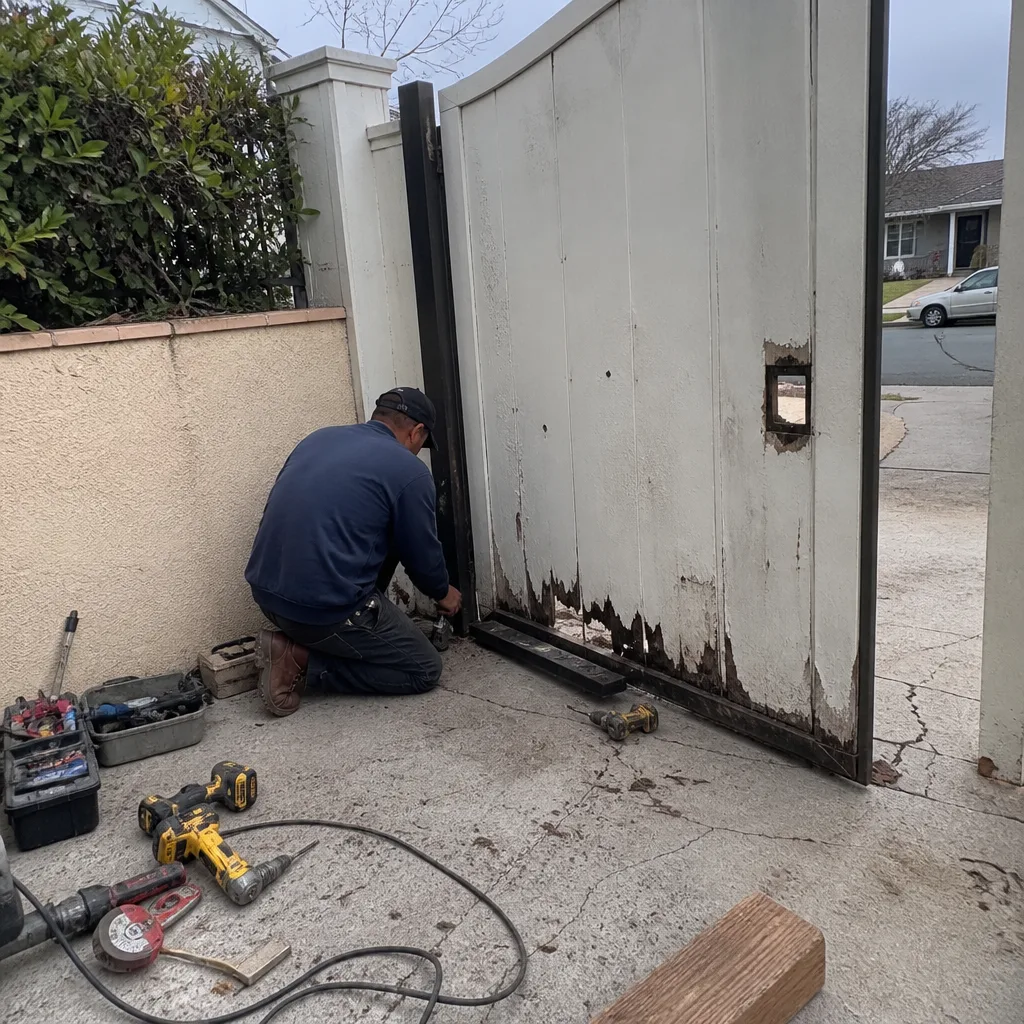 Before
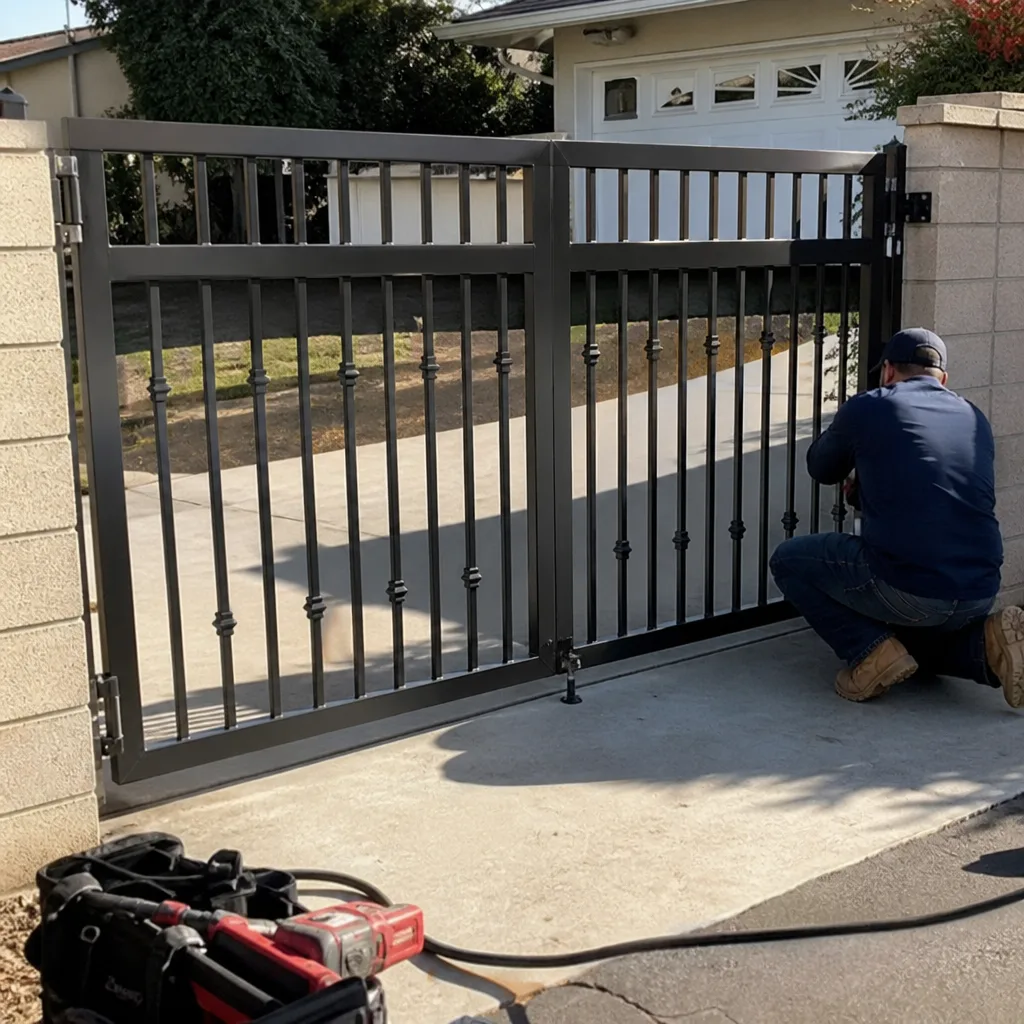
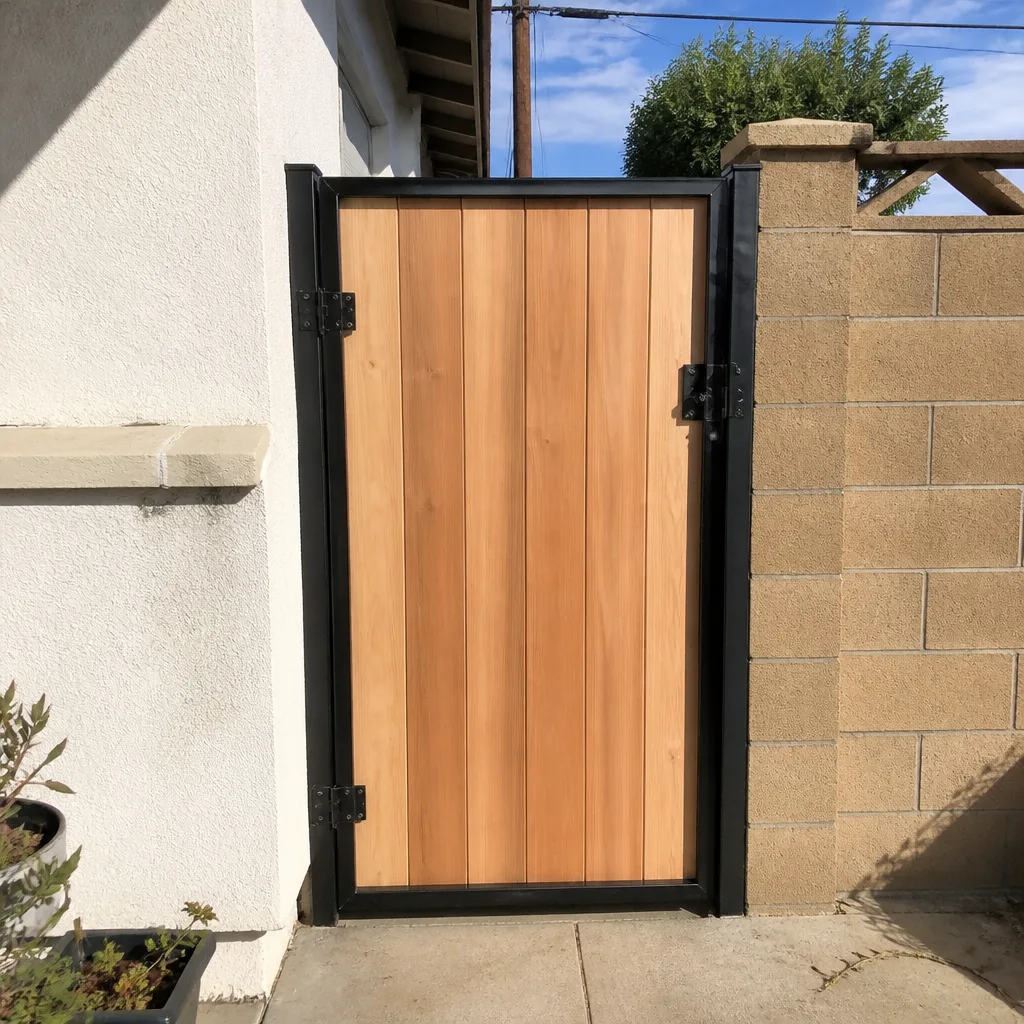 After
After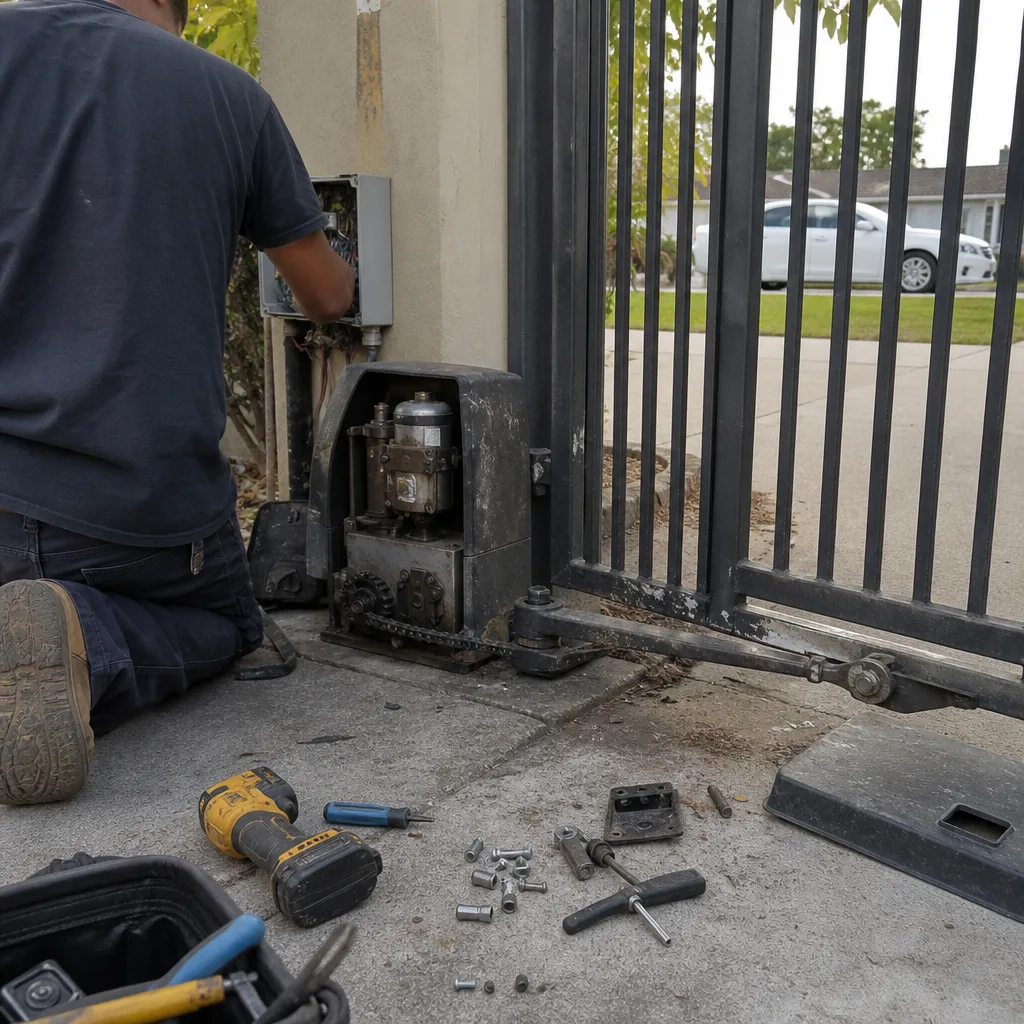 Before
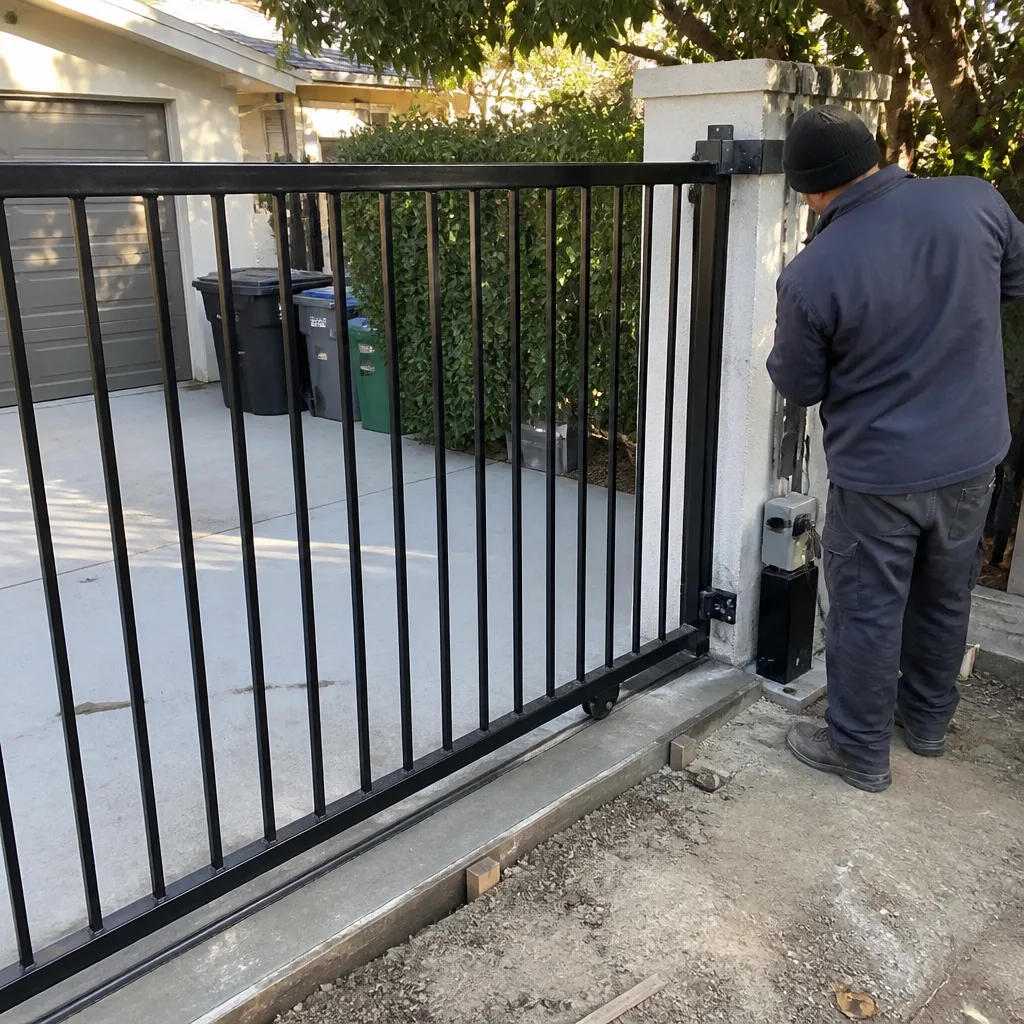 After
After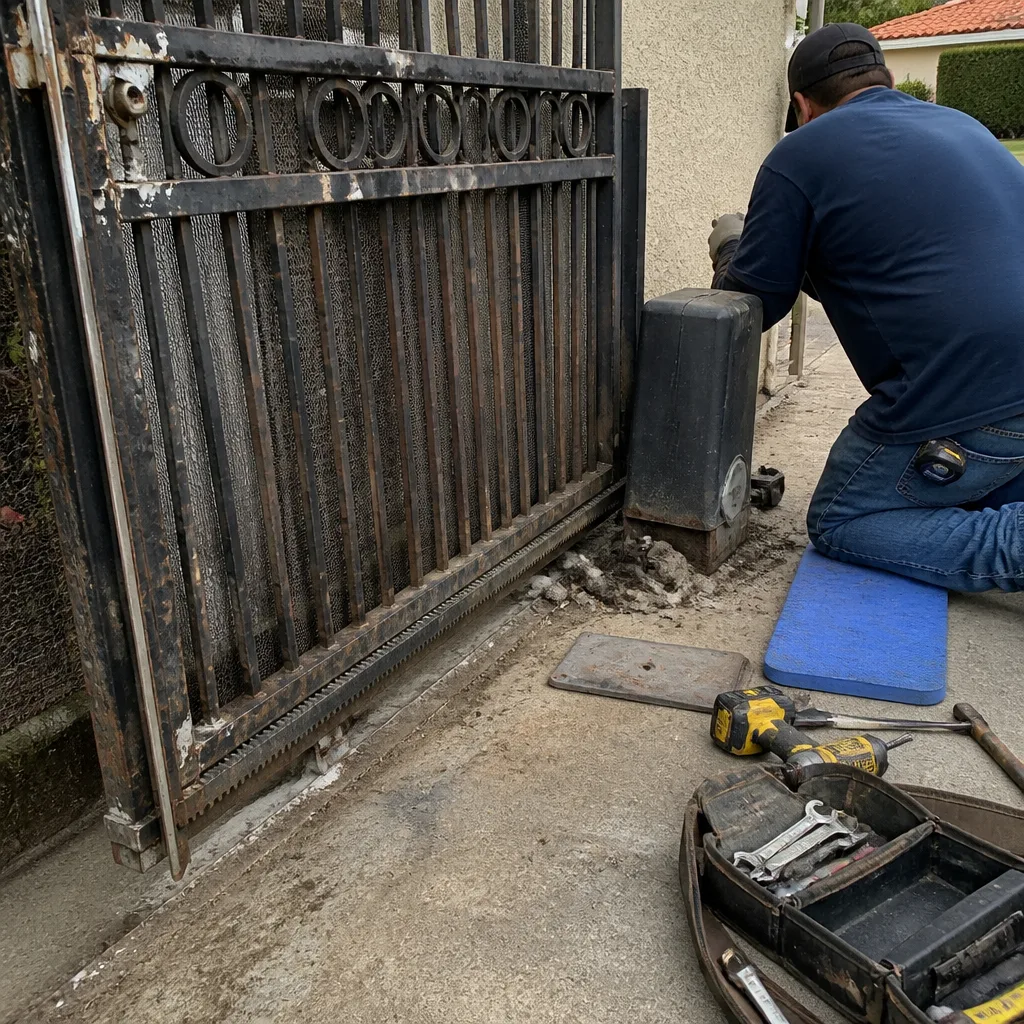 Before
 After
After